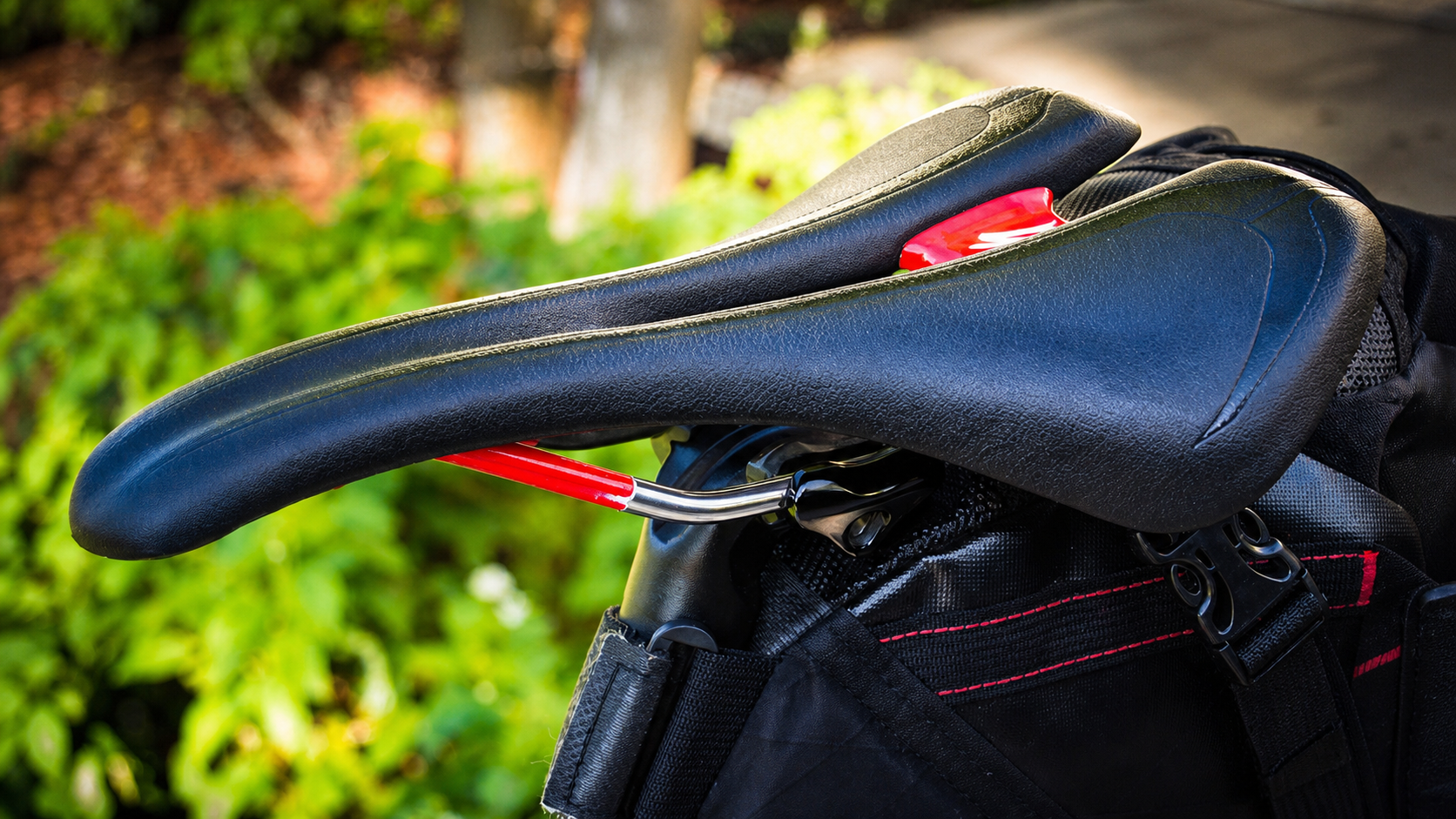
When your saddle is wrong for your body or position, a two-hour ride can feel much longer. The tempting fix is often a wider, softer, heavily padded seat. Sometimes that helps for a short spin, but for longer rides it can create new pressure points and more movement where you least want it.
Comfort on a bike comes from the whole system: saddle shape and width, height, tilt, handlebar reach, riding shorts, and the time your body has spent adapting. If you have persistent numbness, sharp pain, skin problems, or symptoms that do not ease after a ride, stop and get help from a qualified bike fitter or clinician.
Start with sit-bone support
A saddle should support the bony part of your pelvis rather than ask soft tissue to carry the load. That is why a shop measurement or a thoughtful fit session can be more useful than buying the thickest seat on the wall. Width is only one part of the decision, but it is a good place to begin.
More cushion is not always more comfort
Very soft saddles can feel generous in the parking lot. Over distance, though, they may let you sink and shift, spreading pressure into places that are not meant to bear it. A firmer saddle with the right shape often feels better once you are pedaling steadily and changing positions naturally.
Check saddle height and tilt
A saddle that is too high can make you rock side to side. One that is too low can load your knees and keep too much weight on the saddle. A dramatic nose-up or nose-down angle can create its own problems. Make small adjustments—one at a time—and ride enough to learn what each change does.
Do not ignore reach and hand position
Your hands, feet, and saddle share the work. If the bars are too far away, too low, or too high, your pelvis may rotate or brace in a way that makes the saddle feel worse. A saddle problem is sometimes a cockpit problem wearing a different name.
Build time in the saddle gradually
A good setup still needs an adaptation period. Increase your ride time in sensible steps, stand briefly on climbs or rough sections, and move around before discomfort becomes the only thing you notice. Long-distance comfort is learned as much as it is purchased.
Use the basics that actually help
Clean, well-fitting riding shorts, a dry chamois, and a consistent hygiene routine matter. So does keeping your bike and luggage from forcing you into an awkward position. These are unglamorous details, but they make a real difference on a bikepacking day.
Make changes methodically
Do not replace the saddle, shorts, pedals, and bars all at once. Start with one change, ride the same familiar route, and take a note afterward. That turns comfort from a guessing game into a small field test.
The goal is not to tough out pain. It is to create a position you can return to day after day, with enough comfort left to pay attention to the road, the weather, and the camp at the end of the ride.