Originally published in 2019. Refreshed in July 2026.
“Do you get soaked hammock camping in the rain?” It is the question I hear most often from riders who like the idea of packing light but are not convinced a small tarp can handle bad weather.
The honest answer is that a hammock will only keep you dry when the whole setup is doing its job: tarp coverage, suspension, insulation, campsite choice, and a little attention to where water is traveling. I wanted to test that idea at home before trusting it farther from home.
The rainy-night test
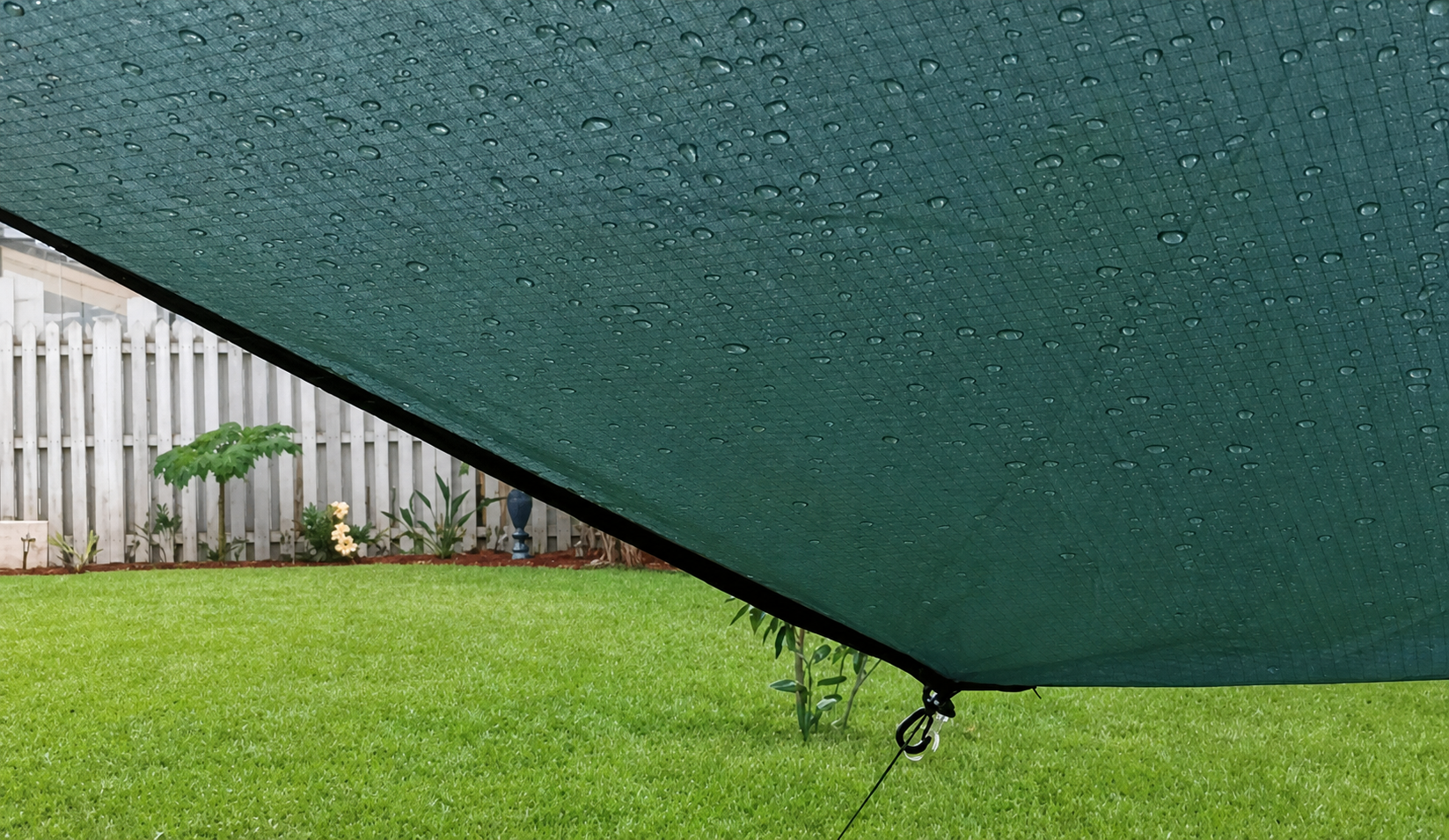
A stretch of wet weather gave me the perfect chance to set up in the backyard. I pitched the tarp, hung the hammock, and used a blanket as a low-stakes stand-in for a sleeping bag. The goal was not to prove that any hammock setup will survive every storm. It was to see whether a carefully pitched shelter could keep the sleep space dry through sustained rain.
After a full night of rain, the blanket was dry. I checked it again through the next day and after another wet night. The simple test confirmed what I had experienced on shorter rides: a hammock can work in rain, but only when the details are right.
Start with a dry path for water
Rain does not only fall from above. It can travel down the suspension and into the hammock if you give it a direct route. A simple drip line—a short piece of cord or another intentional break in the path just before the hammock—helps water fall away before it reaches your sleep system.
That small step is easy to skip when you set up in clear weather. It becomes much more important when the forecast changes after you are already committed to camp.
Pitch the tarp for the weather you have
A high, open tarp pitch feels great on a calm evening. In real rain, lower and more protective is usually the better call. Bring the tarp close enough to block wind-driven rain, make sure the ends of the hammock have coverage, and check that water will shed away from the place you need to sleep.
Before you unload the bike, stand under the tarp and look outward from the hammock’s position. If the exposed angles make you nervous before the rain starts, they will not look better at 2 a.m.
Do not forget insulation
Staying dry is only half the job. A hammock lets air move beneath you, and that can feel cold even when the ground temperature seems mild. Plan insulation for the conditions, protect it from moisture, and do not assume a sleeping bag alone will solve the problem beneath your back.
The best time to learn how your insulation behaves is close to home, where an uncomfortable night is a lesson instead of a trip-ending problem.
A simple rain-ready checklist
- Pick a campsite that is not in a low spot or obvious runoff path.
- Pitch the tarp before you need it, then verify coverage at both ends of the hammock.
- Add drip lines before the rain starts.
- Keep dry clothes and insulation in a waterproof bag or liner.
- Use the bathroom, prepare food, and organize the bike before retreating under the tarp.
- Carry a backup plan and know when conditions are beyond the trip you planned.
What the test really taught me
The backyard test did not make me fearless about rain. It made me more deliberate. Bikepacking is full of small systems, and the rain setup is one of the easiest to practice. A few calm minutes spent on tarp angles, drip lines, and organization can make the difference between listening to rain from a dry shelter and spending the night chasing leaks.
If you are new to hammock camping, practice once or twice where you can walk back inside. Then take that confidence to a short overnight. The first goal is not to prove anything. It is to learn what keeps you comfortable enough to enjoy the ride.