Originally published in 2019. Refreshed in July 2026.
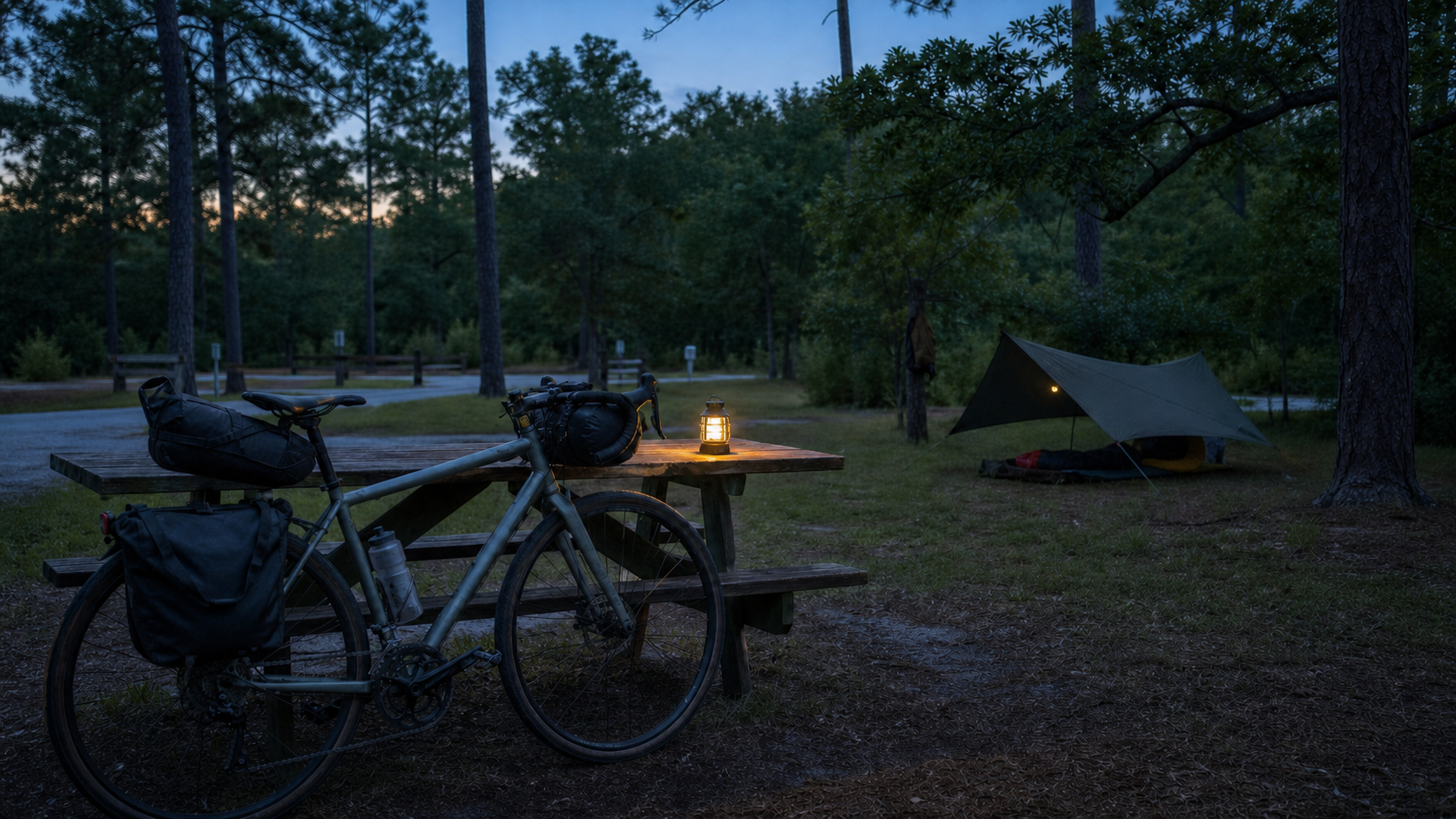
A workday does not have to cancel an adventure. A bikepacking micro-adventure can be as simple as riding to a nearby camp after work, sleeping outside, and continuing to the office the next morning. It is not a replacement for a big tour. It is a way to make ordinary time feel more alive—and to practice the systems that make bigger trips easier.
Work is not an excuse to stop riding
A bike is transportation and a source of freedom at the same time. With a little planning, the distance between home, camp, and work becomes a small route instead of a hard boundary. The goal is not to make a busy week even more complicated. The goal is to find one night that fits and give yourself a reason to use the bike differently.
A simple overnight before work can teach you how your bike handles a load, what you actually need at camp, and how much time your morning routine requires. Those are useful lessons whether your dream trip is a local weekend route or a longer tour.
Keep the first one deliberately simple
- Choose a legal, familiar place to camp within easy riding distance of home and work.
- Plan a route with a safe exit if weather, energy, or work plans change.
- Pack only the camp gear, clothes, food, water, lights, and repair basics you will actually use.
- Carry work essentials in a dry, organized bag so the next morning does not feel chaotic.
- Give yourself enough time to arrive, make camp, and settle in before dark.
The commute becomes practice for the bigger ride
Touring is full of small logistics: loading gear, choosing a pace, managing food and water, protecting dry clothes, and getting yourself somewhere on time. A micro-adventure adds those decisions to a normal week in a low-stakes way. You learn how to move through a morning with a loaded bike. You learn what takes too long. You learn which parts of your kit are worth keeping close at hand.
That kind of practice is valuable because real travel rarely unfolds on a perfect schedule. Weather changes, a mechanical issue eats an hour, a resupply stop closes early, or a route takes longer than expected. The more often you make a workable plan around real life, the more confident you become when a bigger trip throws a surprise at you.
Use the time you have
It is easy to wait for a long stretch of free time before calling something an adventure. But a short overnight can be enough. Ride out after work, sleep somewhere quiet, then make the return trip part of the next morning. The distance does not have to be huge. The change of setting is the point.
Start with a route you can repeat and improve. When it feels easy, add a different campground, a longer way home, or a second night. Small rides are not a lesser version of bikepacking. They are where a lot of good habits begin.
When you learn to fit the bike into ordinary time, bigger adventures stop feeling so far away.