Originally published in 2019. Refreshed in July 2026.
When I first found bikepacking, I made the same mistake a lot of riders make: I treated the gear list like an admission ticket. I thought I needed the perfect bags, a new sleep system, a stove, a tracker, a water filter, and every clever accessory before I could have an overnight adventure.
That thinking kept me at home for a year. The truth I learned from getting out is much simpler: your first bikepacking trip is not a test of whether your kit is complete. It is the ride that shows you what is actually worth carrying.
You do not need the perfect setup to start
A bike, a safe short route, a realistic weather window, and a simple plan will teach you more than months of staring at other riders’ gear photos. The goal of a first overnight is not to look like a Tour Divide racer. It is to sleep outside, ride home, and come back with a clearer idea of what you enjoyed and what you would change.
Start small enough that you can solve problems without turning the trip into a survival exercise. A local campground, a nearby state forest, or a one-night out-and-back makes a better first shakedown than an ambitious route you have to force.
Use what you already have
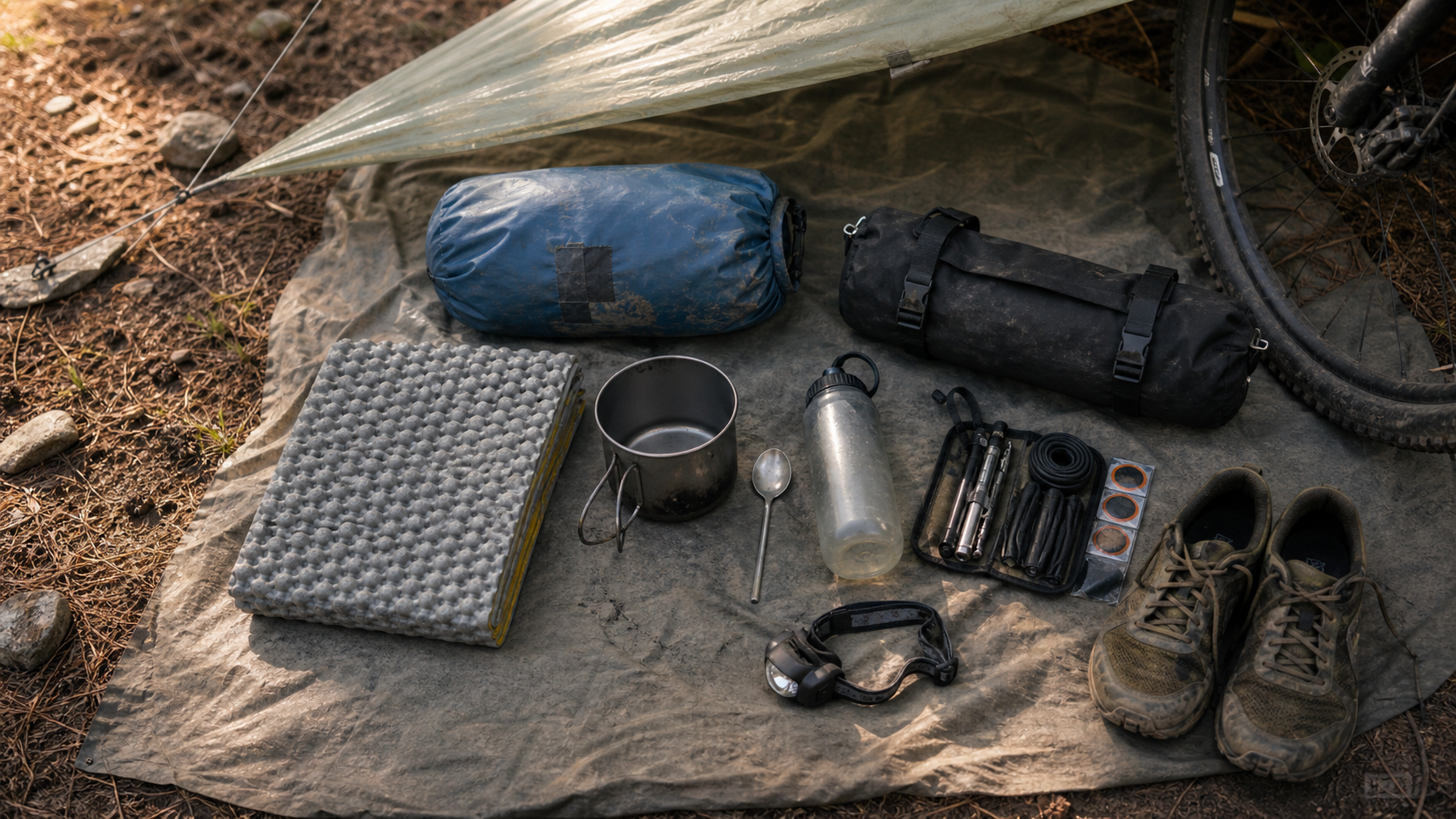
The essentials are less glamorous than a shopping cart. You need a way to carry your overnight gear, a way to sleep warm and dry, water, food, lights, and enough repair basics to get yourself home. Much of that can come from equipment you already own.
- A dry bag or stuff sack can carry layers or a sleeping bag before you own dedicated bikepacking bags.
- A basic tarp, tent, bivy, or hammock system you already trust is more useful than an expensive shelter you have never pitched.
- Extra clothing can do double duty as camp insulation while you learn what temperatures feel like at night.
- Simple meals and plenty of water make the ride easier to manage than a complicated camp kitchen.
- A basic repair kit, pump, spare tube or plugs, and a charged light are a better early investment than novelty accessories.
Let the first rides refine the kit
Every time you ride loaded, pay attention to the same questions: What did I use? What did I carry but never touch? What was uncomfortable? What made the ride feel easier? Those answers are more valuable than somebody else’s gear list because they are built around your bike, your body, your climate, and the kind of trips you actually want to take.
Over time, the kit usually gets smaller and smarter. You might decide a better sleeping pad matters more than a lighter pot. You might learn that organization is worth more than shaving a few ounces. You might find that one reliable bag is a better purchase than three cheap solutions.
Buy after the miles, not before
There is nothing wrong with upgrading gear. Bikepacking equipment can make travel more comfortable, more organized, and more fun. The difference is buying with a purpose. Let a few real overnights reveal the gap before you spend money to fill it.
That approach keeps the price of entry reasonable and leaves more room for the part that matters: riding somewhere unfamiliar, setting up camp, and finding out how good a simple trip can feel.
A good first-overnight mindset
- Choose a route with an easy exit if weather, energy, or equipment changes the plan.
- Pack for the forecast, then bring one layer or option that protects you from being uncomfortable.
- Keep food simple and ride at a pace that leaves time to set up camp before dark.
- Write down the changes you would make while the trip is still fresh.
- Celebrate the finish, even if the route was short. A short overnight is still bikepacking.
The gear will wear out long before the memories of the adventure do.
Start with what you have, strap it to the bike securely, and go. When you come back, you will know what you truly need for the next ride.