Originally published in 2019. Refreshed in July 2026.
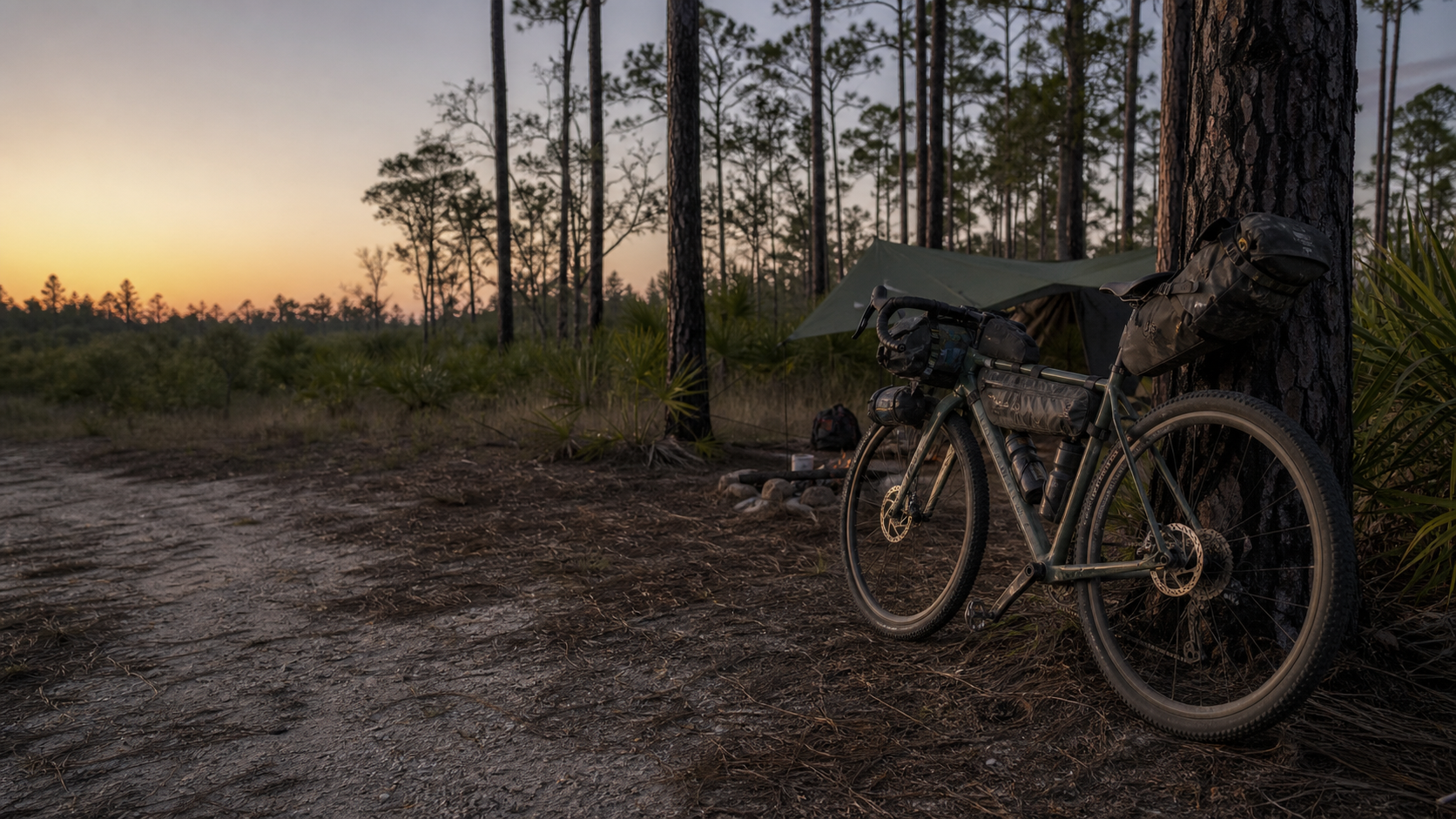
A sub-24-hour bikepacking trip is exactly what it sounds like: one overnight that fits into the small pocket of time between ordinary responsibilities. It may not look like the huge, remote trip most people picture when they hear “bikepacking,” but it captures the part that matters—riding loaded, making camp, waking up outside, and getting yourself home under your own power.
What is a sub-24-hour shakedown?
Think of it as a short, controlled test of your overnight system. You leave with the bike you have, the kit you plan to carry, a realistic route, and one night outside. Because the trip stays close to home and has an easy exit, you can pay attention to the small details without turning every mistake into a major problem.
This is useful when time, family, work, or budget make a multi-day trip difficult. A short overnight still gives you the reset of a mini adventure, and it gives your equipment a chance to show you what works before you rely on it farther from home.
Use the trip to refine your kit
A shakedown works best when you treat it like a field test, not a gear photo shoot. Pack as you would for a longer ride, then make notes while the decisions are fresh. What did you use? What never left the bag? What was hard to reach? What kept you comfortable? What would have been a problem in colder or wetter weather?
- Test a new bag, shelter, sleeping system, light, or cooking setup one at a time when possible.
- Keep a simple note on your phone or in a small notebook for changes to make after the ride.
- Practice loading the bike in the order you will need things: rain layer, tools, snacks, camp items, and sleep kit.
- Carry the safety basics you would need to get home—repair kit, lights, water, navigation, and an exit plan.
- Make one improvement at a time so you know what actually made the trip better.
Change the conditions as you gain confidence
Repeating the same route is a good way to build a reliable baseline, but eventually change one variable. Try a different campground, a cooler night, a longer approach, or a route with more climbing. New conditions reveal whether your kit works everywhere or only in the one place you know best.
There is no need to manufacture danger by leaving behind safety essentials. The goal is to understand your system, not to prove you can suffer without it. A well-planned challenge is more useful than a risky one.
Learn to be comfortable outside
One of the best things a short overnighter builds is quiet confidence. You get used to the sounds after dark, the rhythm of camp, and the feeling of being responsible for your own comfort. That experience is valuable whether you ride solo, with friends, or eventually head out on a longer tour.
Keep it fun enough to repeat
Do not let the word “shakedown” turn the trip into homework. Choose a place you want to visit, bring a simple meal you enjoy, and leave enough time to sit still for a while. The best test is the one you are excited to do again.
When you are ready to turn the shakedown into a complete first-trip plan, use BPL’s Bikepacking for Beginners: First Overnight Guide. It carries the same start-small idea through route choice, loading, camp, weather, and the ride home.
One short overnight can teach more than weeks of planning from the couch.