Originally published in 2019. Refreshed in July 2026.
A backpack is one of the easiest ways to start bikepacking. Load the gear you already own, add water, and go. For a short ride or a simple commute, that can be exactly the right choice. But as the distance, heat, and load grow, carrying everything on your body can quietly make the ride harder than it needs to be.
What I noticed on a long training ride
When I was training for the CFITT in 2011, a large hydration pack was how I carried my hammock, sleeping bag, tarp, food, and water. It did not feel especially heavy at the start. On longer rides, though, I noticed that around the 55- to 60-mile mark I was working harder to keep the same pace.
One day I miscalculated a training route and came home about 10 miles short of my goal. I dropped the pack, took a water bottle, and rode the final miles without it. The effort felt more sustainable as the ride went on. That was not a medical test or proof that one bag was the cause, but it was a useful personal signal: I needed to pay closer attention to where I was carrying weight.
Move the dense weight to the bike
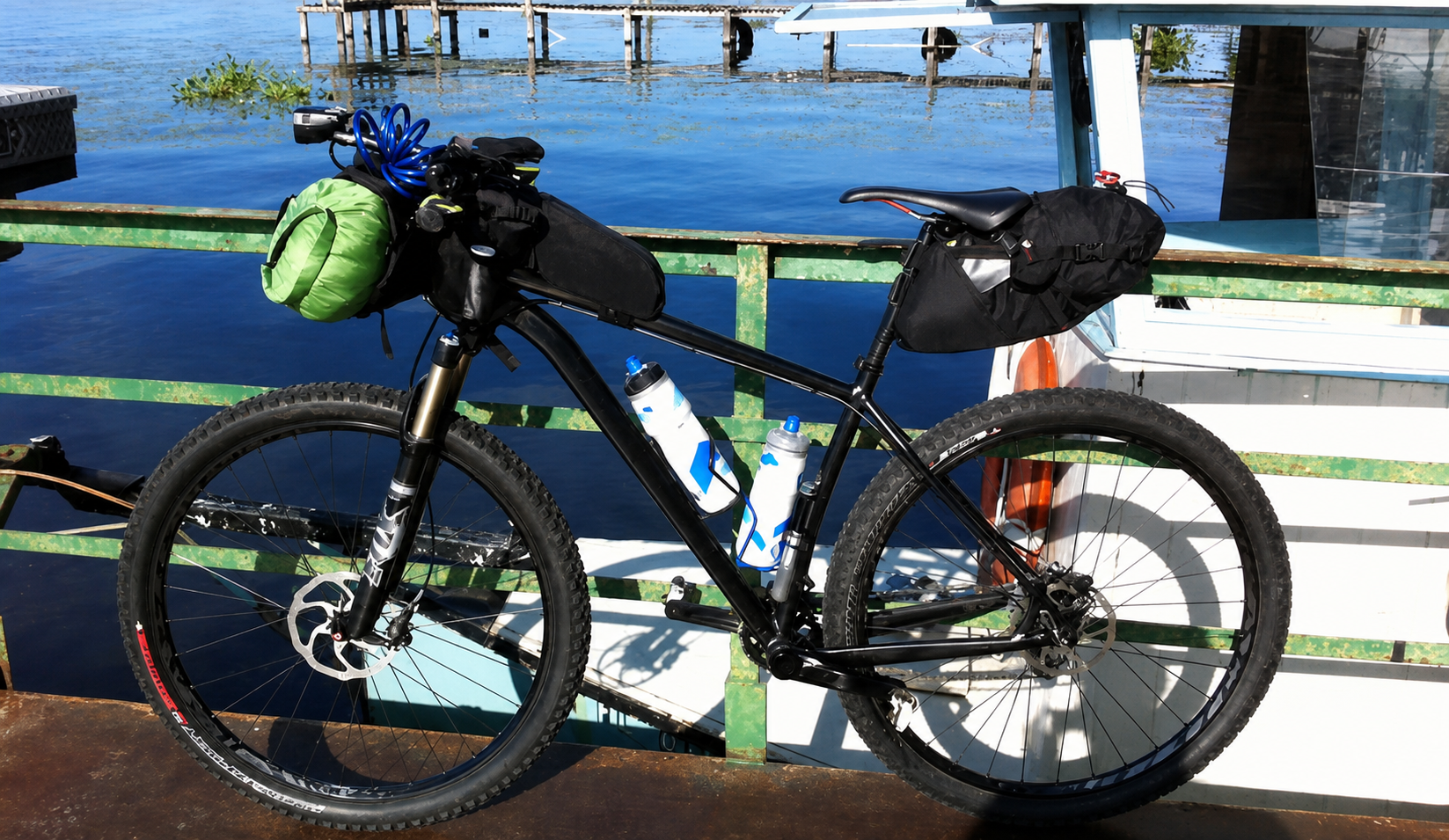
Bikepacking bags do not need to be expensive or perfect before they become useful. The simple goal is to move the heaviest, least comfortable items off your back and onto the bike in a secure, balanced way.
- Put water, tools, food, and other dense items low and close to the bike’s center.
- Use a small frame bag, handlebar roll, seat pack, or a securely strapped dry bag for bulky camp gear.
- Keep only the things you need while riding close at hand: a light layer, snacks, phone, or a small hydration pack if that works for you.
- Check the load after a few miles. Anything that shifts, rubs, or interferes with steering needs a new home.
Make one change, then ride
You do not need to buy a full matching bag system to test the idea. Start with a familiar route, move one or two heavy items from your backpack to the bike, and notice what changes. Pay attention to shoulder comfort, heat, how the bike handles, and what you can reach without stopping.
A short loaded ride is more useful than a perfect packing list. It shows what is secure, what is awkward, and what you never needed to carry in the first place.
A backpack still has a place
This is not an argument that every rider must stop wearing a backpack. A small pack can be handy for a commute, a short ride, extra water, or gear that needs to stay with you. The point is to make the choice on purpose. If the pack keeps getting heavier mile by mile, move more of the load to the bike and see whether the ride becomes easier to enjoy.
Build the system from real rides
Start with the gear you have, then buy only the pieces that solve a problem you have actually felt. The bikepacking-on-a-budget guide is a good place to begin; follow it with a sub-24-hour shakedown to learn what earns a permanent place on the bike.
The best setup is not the one with the most bags. It is the one that lets you ride farther, arrive with more energy, and look forward to doing it again.