Buying every purpose-built item before your first overnighter is an easy way to spend too much before you know what you actually need. A better starting point is to look at the useful things already in your house, then test a simple setup close to home.
This is not about improvising the systems that protect you when a plan changes. Your shelter, sleep insulation, lights, water treatment, secure load carry, and essential bike repair kit need to be dependable. But organization, comfort, and small packing problems often have a good low-cost answer sitting in a drawer, garage, or recycling bin.
Start with a simple test
Before an overnight, load the bike and ride it locally for an hour. Does the item stay put? Does it stay dry? Can you reach it when you need it? Does it create a sharp edge, rattle, or snag point? Those questions matter more than whether something looks “bikepacking specific.”
When a stand-in causes a problem, that is useful information—not a failed trip. It tells you exactly what a future purchase needs to solve.
Everyday items that can earn their place
A clean wide-mouth container for small repair items
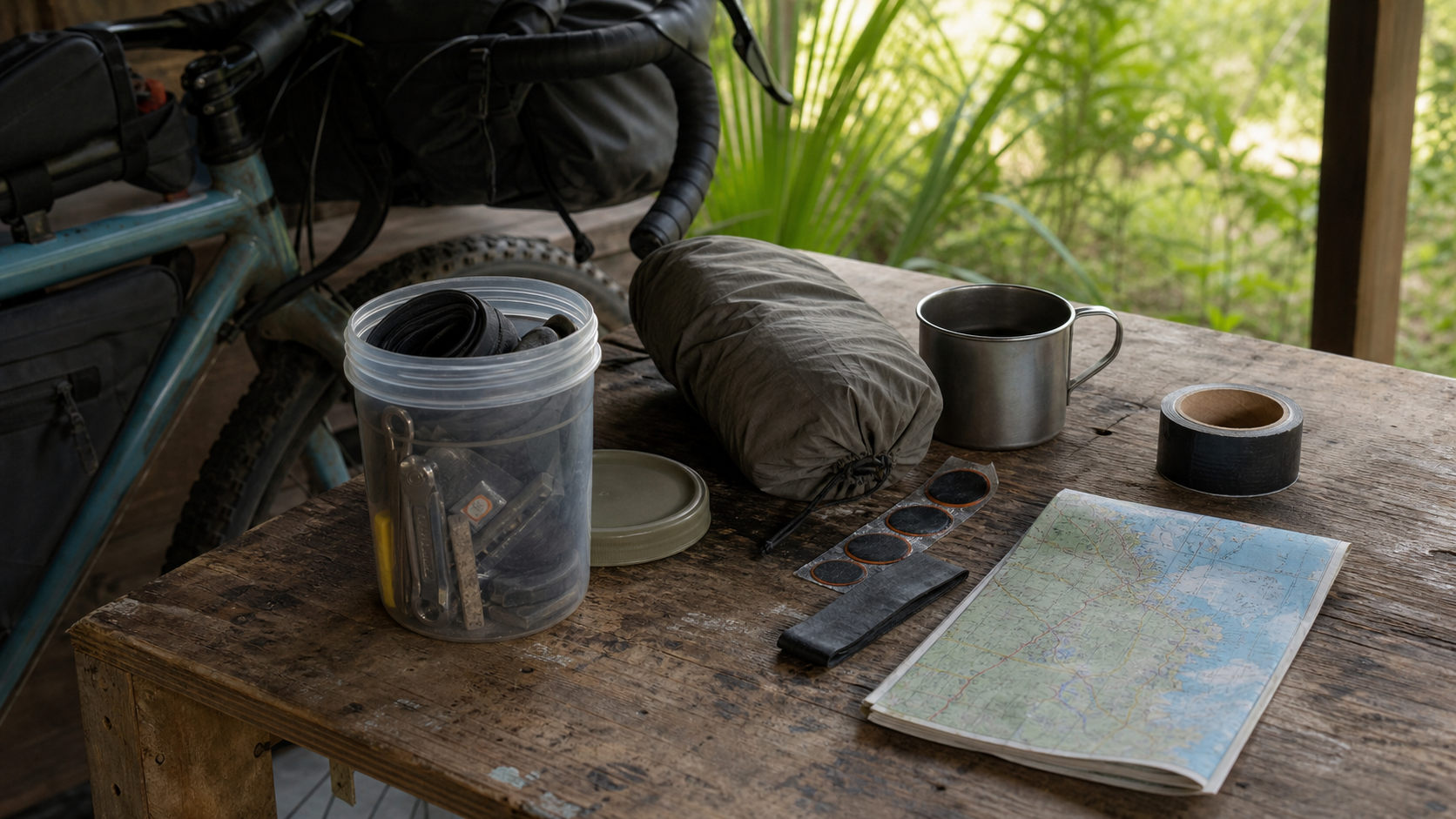
A sturdy, clean container can keep a patch kit, chain links, small tools, or a few spare parts together and away from soft gear. Keep it compact and test that it does not bang against the frame. Use only containers appropriate for the items inside; do not repurpose unknown or chemical containers for drinking water, food, or fuel.
A simple pouch for the little things
An old stuff sack, zip pouch, or durable drawstring bag can turn loose items into one predictable kit. A pouch is especially helpful for chargers, toiletries, snacks, and layers that otherwise migrate to the bottom of a bag. The goal is not more bags—it is knowing where things are when it gets dark or wet.
Old inner tube material as protection, not a primary strap
Clean pieces of old inner tube can protect a frame from rubbing or keep a small item from sliding. They are handy material to save, but they should not replace a secure, purpose-made attachment where a load coming loose could affect the ride.
A durable mug or small pot you already trust
If you already own a compact, heat-safe mug or pot, it may be enough for a first overnight. Keep the cooking system simple and use it only as its maker intended. There is no need to chase a DIY stove or ultra-minimal cookware setup before you have learned how you like to eat outside.
Spend first where failure matters
For a first trip, put your money toward the pieces that make the ride and night safer, drier, and more comfortable. Save clever substitutions for the low-consequence jobs: keeping small items organized, protecting gear from abrasion, or making the packing routine easier.
That approach fits the larger bikepacking-on-a-budget plan: begin with what you have, make one careful trip, and buy only what earns a place. Once the load is ready, move its weight onto the bike instead of your back with this guide to bikepacking without a backpack. If you want the smallest possible test, start with the sub-24-hour shakedown.
The takeaway: creative reuse works best when it reduces friction, not when it asks a questionable object to do a critical job. Start simple, test locally, and let each ride show you what is truly worth upgrading.